During the application process, law school interviews are not usually required. I, however, had two different law interviews which both went very well, prompting me to get into both of the schools I interviewed with.
Nevertheless, each interview was very different. They both were a one-on-one call (I have heard of friends having group interviews) but each interviewer used a different tone.
One was a straight-forward, basic interview with the normal questions you would expect: why do you want to enter law? why this law school? etc. for 15 minutes.
The other was an alumni who asked me about my interests as she explained her own, taking 30 minutes. This one was more informal and felt more like a conversation. She connected some of the things I am interested in or currently doing to opportunities at this law school. She asked questions about my story and what my proudest accomplishment was. Overall, it was more like she was selling the school than interviewing me.
After these interviews, a few tips became clear:
- You have everything you need: One of the hardest things about the law school application process was not feeling like I was prepared ever. I was experiencing imposter syndrome before even going to school! I don’t care what your past looked like, I PROMISE you that you have what it takes to be successful. You can leverage any experience, and you will find that, in the right light, your past always applies. For example, you might have worked for Starbucks, and think, “Man, I have no experience in law.” Lies. You have so many skills that transfer perfectly to law school (like people skills)!
- Strategically prepare: look up a list of interview questions like these and write answers to them: (from https://ingeniusprep.com/blog/law-school-interviews/).
- Why do you want to become a lawyer?
- Why are you interested in our school?
- What kind of law interests you the most?
- What is your dream job in law?
- Where do you see yourself in 10 years?
- How would you contribute to your class?
- What are your biggest strengths and weaknesses?
- Tell me about an experience you had in an internship, or job that makes you proud.
- How do you spend your free time?
- What’s one thing that you might be scared of or hesitant about in law school?
- What has been your biggest challenge so far?
- What kind of law student do you expect to be?
- If you had a chance to have dinner with anyone alive or dead, whom would you choose?
- Share a book that influenced you or a book you’re currently reading.
- Explain your journey from your previous career to law.
- What excites you the most about moving to this city?
- Tell us more about a particularly meaningful extracurricular activity.
- What would you tell the US President?
- What was the best part about your summer job last year?
- What kind of student do you expect to be?
I brainstormed reasons I could thrive at the law school, helping me find a way to answer all of these questions in a story format. I also researched numerous details about the law school to ensure I was clear about exactly how I would leverage my time at the law school. To do this, look at their web page thoroughly and find out any clinic, student group, law journal, classes or moot court you might want to join.
3. Do not think about their goal of the interview: While prepping for the interview, it was challenging not to think they are doing this because they are unsure about me or I need to perform. However, this will not serve you and these thoughts could be truth or could be the farthest thing from it. I would recommend attempting to limit ruminations about their goal of the interview (at least until after).
4. Try to enjoy it: In the end, you are having a meaningful conversation about your goals and dreams with another human. Try to think of it as a conversation with a friend who is genuinely interested.
5. Remember if they do not want what you have to offer, it is their loss: there is an excellent podcast I will link here that expands upon this concept (or scroll down to BL&J episode 155). You have incredible things to offer, do not doubt this. Do not doubt this. You have a unique perspective and life experiences that will serve you and everyone around you in the future. If they did not select you, that is their loss. It was important to me, during the entire interview, to keep this in mind. A practical step to help with this mindset was list out a few characteristics I wanted to get across to my audience (example: integrity, justice, joy, learning and determination). Then, during the interview, highlight these key traits that comprehensively represent you. Afterward, you are more likely to feel like you have showed them your genuine self and they can decide if it is a good fit.
6. Think of questions to ask: Interviewers are often most impressed by the questions asked rather than the questions answered. If you can think of some general and specific questions that show your knowledge and interest you will shine. Examples are:
- Nearly every law school has recent graduates who cannot find permanent, full-time legal employment. What does the [The Candyland School of Law] do to help them get on track?
- Why do you choose to represent [The Candyland School of Law]?
- What makes a student a successful student/applicant for [The Candyland School of Law]?
7. Send a thank you letter or email with specific details from the interview if possible.
Brief Example:
Dear x,
I would like to thank you for the opportunity to interview on [date]. It was a pleasure to meet you and I wish you all the best. I am grateful for your particular emphasis on [make it personal] and clarification of [detail]. Please reach out in the future if I can be of any additional assistance as you determine the optimal candidates for your school.
Sincerely/Gratefully/All the best, First and Last Name
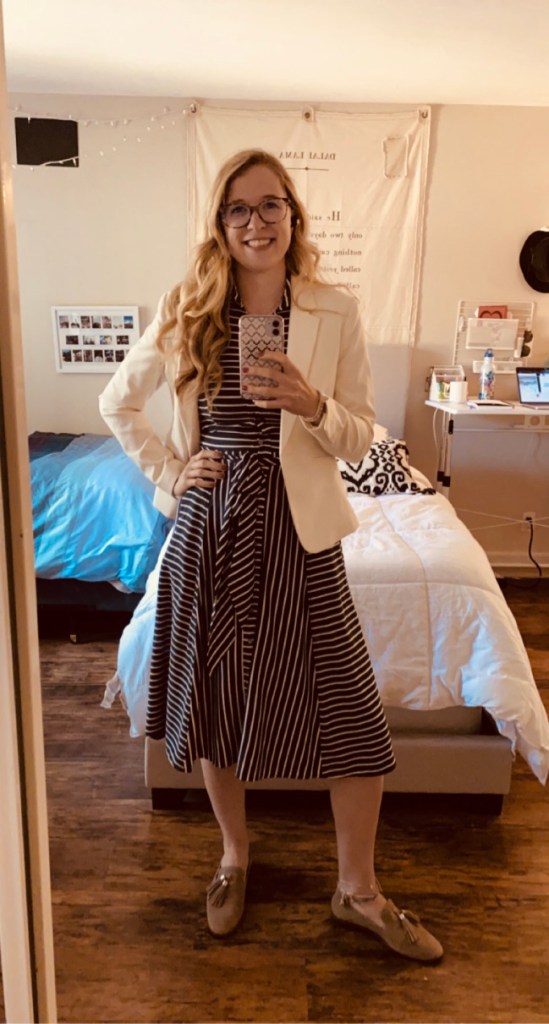
8. Dress up professionally: Although both of my interviews were on the phone and in one they could not see me, dressing up professionally albeit comfortably helped me feel confident as I walked around and conducted the interviews.
9. Schedule something fun after: I am convinced that I do better in any test, stressful event, etc. if afterward I know I am celebrating. So of course, I usually go to a coffeeshop, but simply find an act of self care you can plan for afterward.


 bold brookings & brews